How To Prevent Dog Bites: Top Tips for Pet Sitters
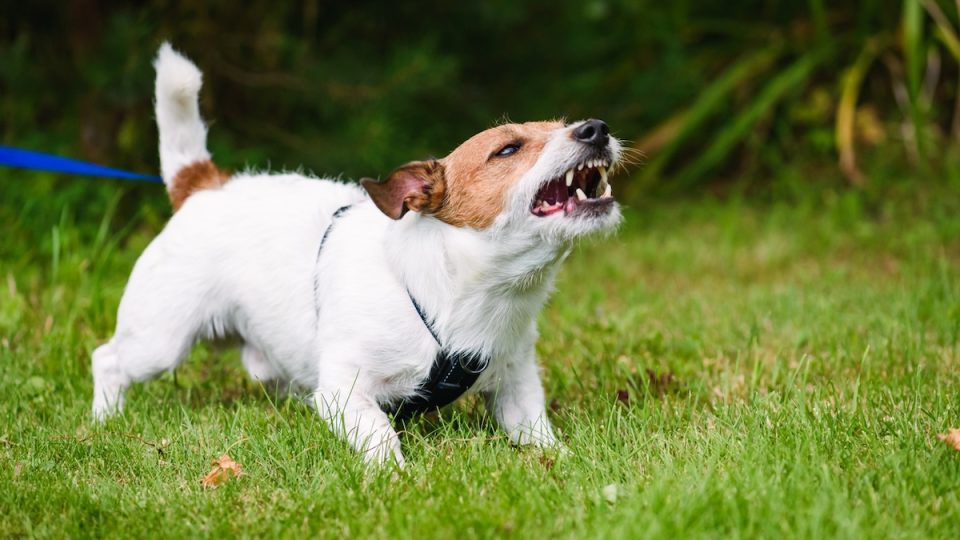
The best way to prevent dog bites as a pet sitter is to know why they happen in the first place.
Dogs rarely bite “out of nowhere.” It’s usually a response to stress, fear, confusion, or feeling cornered, especially when they’re eating, resting, or adjusting to sudden changes in their home environment.
According to Alexandra Bassett, certified trainer and founder of Dog Savvy Salt Lake City, every dog is capable of biting. “Even the sweetest, most social dog can bite if they’re pushed far enough or put in the wrong situation,” she says. That doesn’t mean that every dog is dangerous. Rather, all dogs have a threshold that should be respected.
In this guide, we’ll cover how to best prevent dog bites as a pet sitter, so you can keep you and the dogs in your care safe.
Gather Information
As a pet sitter, preventing dog bites starts before you meet a new dog. In your intake, ask the potential client questions that will help you understand how the dog behaves in situations where they might feel uncomfortable or stressed.
Here are a few things you can ask to get a clearer picture of a dog’s behavior.
- Has your dog ever bitten a human or another animal for any reason? This response lets you know if the dog has a bite history.
- Has your dog ever shown any type of aggressive behavior (growling, snapping, lunging, etc.)? If the client casually mentions that a dog growls sometimes, this is useful information. It tells you the dog has boundaries and is already good at communicating them.
- If your dog has shown aggressive behavior or bitten before, what was happening in that moment? This helps you identify patterns or triggers that have pushed a dog to bite in the past, such as a person or other dogs encroaching on their space.
- Does your dog exhibit any signs of resource guarding (food, toys, space, people)? Resource guarding is a common trigger for bites, especially when a dog is in an unfamiliar space or with unfamiliar people.
- How does your dog typically respond to stressful situations or new environments? This will help you understand how quickly the dog escalates under stress, and what early warning signs to look for so you can defuse the situation.
- What are your dog’s known triggers? Knowing triggers helps you proactively avoid situations where the dog may feel threatened or overwhelmed.
- Does your dog have any injuries, sensitivities, or areas they don’t like being touched? Dogs may bite when they’re in pain or feel discomfort. Find out if there’s a place on their body that you should avoid petting/touching.
- Does your dog do okay in multi-dog households, or do they need to be managed separately? This helps you understand whether the dog can safely interact with other pets in your care or if you should keep them separated for feeding, walking, or bedtime.
When to say no
Sometimes, the most professional and safest decision is declining a booking. If someone’s answers make you unsure if you can safely handle the dog, it’s important to step back. This protects you, the dog, and any other animals in your care.
It can feel uncomfortable, but Bassett explains that turning down a job isn’t a failure—it’s good judgment.
Here are a couple of sample options to communicate your decision clearly but firmly:
- “Thank you so much for the details. Based on what you’ve shared, I don’t think I’m the best fit for this sitting, but I really appreciate the opportunity.”
- “I want to make sure your dog is set up for success, and I don’t feel confident I can provide the level of care they need in this case.”
David Petrus Ibars via iStock
Prevent Dog Bites to Humans
As a pet sitter, the best way to prevent a dog from biting others is to avoid situations where a dog feels threatened, cornered, or forced to interact with people. Respect what the dog is communicating, give them space, and try not to push them into scenarios where they feel like biting is their only option.
Here are a few strategies to consider:
- Learn canine body language. Knowing how to read a dog’s body language, especially subtle signs of stress, can help prevent bites.
Watch for early warning signs like stiffening, turning away, lip licking, or whale eye. - Respect what the dog is communicating. If a dog growls, stiffens, or moves away, take that as a clear sign to give them space. Bassett says distance is one of your most powerful tools because it reduces pressure on the dog and immediately increases your safety.
- Never back a dog into a corner or trap them in tight spaces. If a dog feels blocked in or unable to move away from a situation, they might feel like their only way out is to bite.
- Let the dog choose how they want to interact with you. Instead of reaching for a dog, allow them to approach you first for petting or contact. Or toss treats and play games so they can interact with you without being touched.
- Avoid disturbing dogs while they’re sleeping or eating. There’s a reason behind the saying “let sleeping dogs lie.” Dogs may react defensively if startled or interrupted.
- Limit guests and visitors if the dog is fearful or reactive. Additional strangers in the home can increase stress and anxiety.
- Keep children away from dogs with a bite history. Friendly dogs can become overwhelmed by fast movements, loud noises, or unpredictable behavior. Even if the dog doesn’t have a bite history, it’s important to closely supervise children when they’re around any dog.
Monitor Multi-Dog Interactions
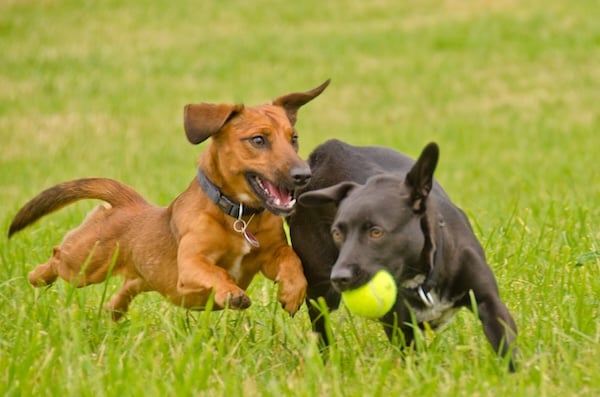
Even dogs who are typically friendly with other dogs can behave differently when in a new group. After all, dogs have different personalities, quirks, and energy levels, just like people, and they won’t get along with everyone.
When watching multiple dogs, it’s important to supervise their interactions, especially after the initial introductions. That way, you can quickly step in and separate the dogs before anyone feels the need to escalate to a bite.
- Loose, relaxed body language (soft movements, wiggly posture)
- Play that goes back and forth, with both dogs taking turns
- Frequent pauses or breaks during play
- Dogs choosing to disengage and move away on their own
- Neutral behavior around shared spaces (no growling or guarding around toys, beds, or people)
Signs you need to step in:
- Stiff body posture or sudden freezing
- Hard staring, hovering, or one dog blocking another’s movement
- Escalating intensity (play that becomes too rough or one-sided)
- Growling, snapping, or showing teeth
- Tension around food, toys, or attention (resource guarding behaviors)
- One dog is actively trying to escape
If you need to separate the dogs, try to move them away from each other. Avoid reaching between the dogs or grabbing collars, as this can put you at risk of a bite.
Instead, use a positive interrupter (a kissy noise, a whistle, a clap, a finger snap) to get the dogs’ attention. You can also place a barrier between them, like a couch cushion or baby gate, or toss treats in opposite directions.
Brinja Schmidt via iStock
Prevent Resource Guarding
Resource guarding is a common behavior that can trigger a bite. Regardless of whether the dogs in your care have a history of resource guarding, these are good rules of thumb to follow.
- Put away high-value items when watching multiple dogs. Pick up chews, toys, and other high-value objects so the dogs don’t feel the need to compete for them.
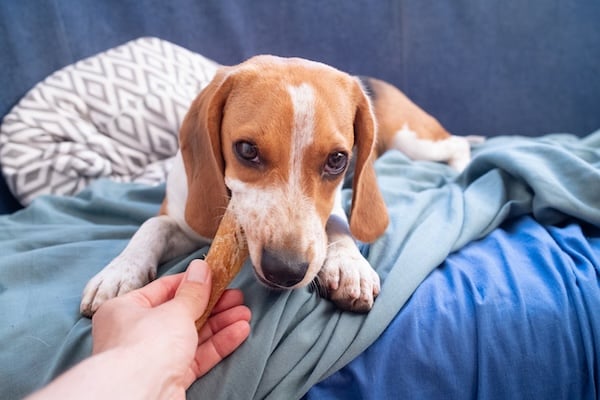
- Give dogs plenty of space while they’re eating or chewing. Dogs may feel vulnerable in these moments and are more likely to react or guard if you get too close to them.
- Feed all dogs in your care separately. Use crates, gates, and playpens to feed them separately and avoid any issues.
- Never put your hand in a dog’s food bowl while they’re eating. This action can feel threatening to the dog and may trigger a defensive response, even in dogs who are usually relaxed.
- Don’t take items directly out of a dog’s mouth. Instead, Bassett recommends offering the dog something better, like a high-value treat, and then redirecting them away from the item so the dog willingly moves off it and you can safely pick it up.
Practice Safe Walks
Walks are a common activity that can overstimulate dogs. As a sitter or dog walker, you’ll likely encounter other dogs, bikers, joggers, and other triggers. The key to preventing dogs from biting on walks, says Bassett, is to stay a step ahead by avoiding potential conflicts before they start. Here’s what can help.
- Follow local leash laws at all times. Keeping dogs on a leash gives you more control and makes it easier to create distance from any potentially stressful situations.
- Use secure, well-fitted gear. Check that collars, harnesses, and leashes fit properly before each walk to prevent slipping or escapes.
- Ask the client if they use any safety gear. Some dogs may use tools like muzzles or leash wraps to signal they need space.
- Avoid greetings with unfamiliar dogs or people. Even if the other dog seems friendly, you don’t know how they will react.
- Cross the street or create distance when needed. Don’t be afraid to take the long way around. More space means less stress for everyone.
- Avoid busy paths. Runners, bikers, and crowded areas can overwhelm or startle dogs, especially if they approach quickly from behind.
- Carry a deterrent for loose dogs if appropriate. Tools like pet-safe spray or an umbrella can help you prevent off-leash dogs from rushing you on walks.
- Advocate for the dog when needed. It’s okay to tell others your dog needs space. Remember, your priority is keeping everyone safe.